
A lot of people see those blue Amazon vans rolling through the neighborhood and think, "I could do that." The job looks simple from the outside. But the hiring process has a few layers worth knowing before you apply.
There are two completely different ways to become an Amazon delivery driver, and most job seekers don't realize it until they're halfway through the wrong application.
Getting that part right upfront saves real time. This guide breaks it all down for first-time applicants.
DSP vs. Flex: The Fork in the Road Nobody Explains Clearly
The single most confusing thing about applying for an Amazon delivery driver job is that "Amazon driver" is not one job. Two separate systems exist, and they hire through separate processes, pay differently, and require different things from you.
Amazon DSP drivers work for small independent companies called Delivery Service Partners. These companies operate the branded blue vans.
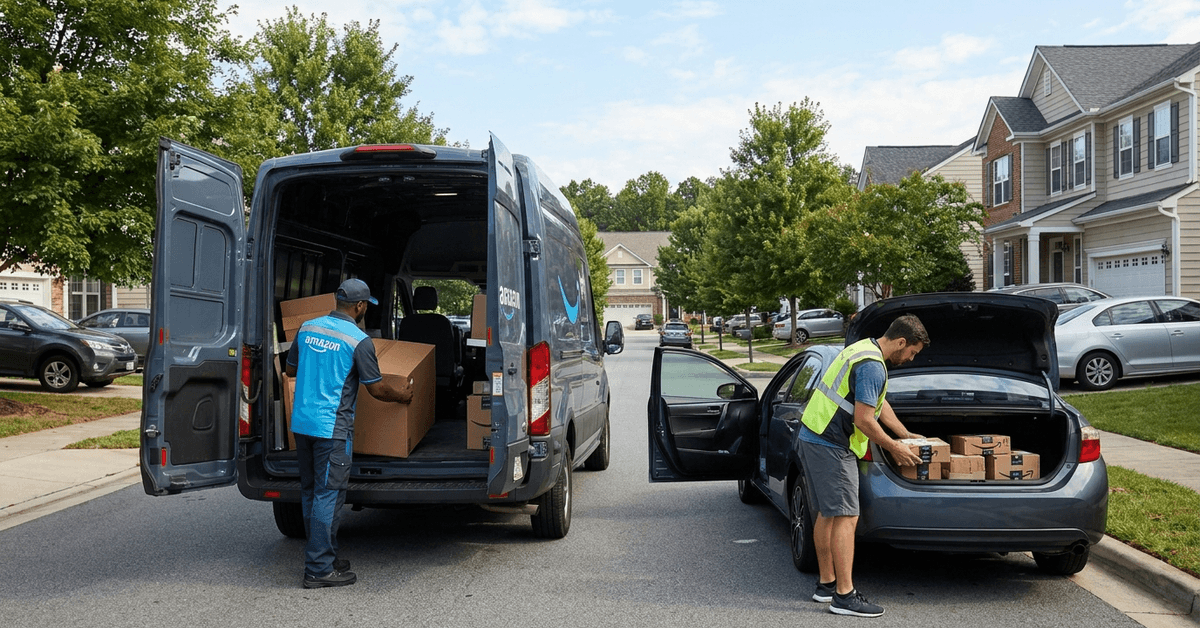
They hire you as a W-2 employee, which means taxes are withheld automatically, and full-time positions often include health insurance and paid time off. The routes are assigned, the van is provided, and you show up to a station to start your day.
Amazon Flex drivers use their own cars, pick up delivery blocks through an app, and work as independent contractors.
Flex is closer to a gig economy arrangement. You set your schedule, but you're also responsible for your own taxes, including quarterly self-employment filings. The income can fluctuate depending on how many blocks are available in your area.
I think the Flex arrangement gets oversold to people who want full-time income.
The per-block pay sounds decent on paper, but block availability varies by region and season, and the tax burden surprises a lot of first-timers who didn't budget for self-employment tax.
Which Option Fits Your Situation
| Feature | DSP Driver | Amazon Flex |
|---|---|---|
| Employment Type | W-2 Employee | Independent Contractor |
| Vehicle | Company-provided van | Your own qualifying car |
| Tax Handling | Employer withholds | Self-managed, quarterly |
| Schedule | Assigned route blocks | Self-selected app blocks |
| Benefits | Health insurance possible | None provided |
| Minimum Age | 21 in most regions | 18 in some areas |
The DSP path makes more sense if you want steady, structured income. Flex works better as a supplement to other income, not a primary job.
What the Amazon Delivery Driver Application Actually Looks Like
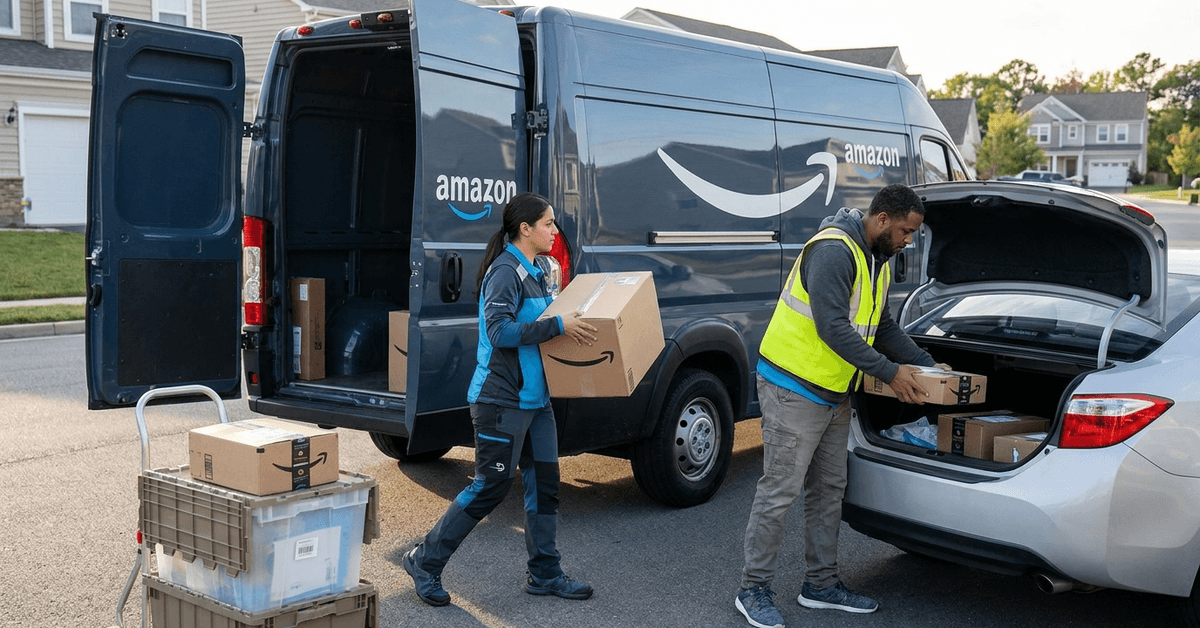
The process is more involved than most logistics jobs at this pay level. Expect at least a week from application to first day, sometimes longer depending on background check volume.
Step 1: Finding the Right Job Posting
DSP and Flex have separate application portals. Searching "Amazon delivery driver jobs" on Google pulls up both, but they're run independently.
DSP positions are posted by individual DSP companies, so listings vary by region and hiring volume. Flex has its own Amazon Flex app where you apply directly.
Step 2: The Online Application
The form asks for basic personal information, your driving history, and availability. Screening questions often touch on physical requirements. Lifting packages up to 50 lbs is part of the job, and applications flag this early so there's no surprise later.
Step 3: Background Check and MVR
Every applicant goes through a criminal background check and a motor vehicle records review.
Serious traffic violations can disqualify you. Minor infractions are evaluated case by case, but a history of speeding tickets or a DUI on record is typically a problem. This step can take a few days.
Step 4: Interview (DSP Positions)
DSP hiring includes a brief interview, either in person or virtual. The focus is reliability and communication. They want to know you'll show up on time and handle customer interactions without issues. It's not a high-pressure interview, but preparation matters.
Step 5: Onboarding and Training
New DSP drivers go through training that covers safe driving, package scanning, route navigation using Amazon's delivery app, and customer handoff procedures. Some of this is now done digitally. Flex drivers get a shorter onboarding through the app itself.
The Requirements That Catch People Off Guard
Plenty of applicants discover a disqualifying requirement after spending time on the application. Knowing the list in advance helps.
For DSP positions, the standard requirements are:
- Age 21 or older (Flex allows 18 in some locations)
- Valid driver's license for your state
- A clean or near-clean driving record
- Ability to lift packages up to 50 lbs repeatedly
- Consent to background and MVR checks
For Flex drivers, you also need a qualifying personal vehicle. Sedans and larger cars typically work. Compact cars sometimes don't meet the cargo space requirements.
The age requirement is where I'd push back on something I see repeated in job-seeker forums: people treat the 18-year-old Flex option like a guaranteed path in. It's geographically limited.
Many markets only allow Flex sign-ups from applicants 21 and older, matching the DSP requirement. Check your specific market before assuming you qualify at 18.
Daily Life in the Role: What the Job Posting Skips
The application describes the job in clean, neutral terms. The actual day is a different thing.
DSP drivers typically deliver dozens of packages per route, and during peak seasons like Q4, that number can climb past 150 stops. Amazon uses performance metrics to track punctuality, package safety, and customer feedback scores.
Those metrics feed back to the DSP company, which means pressure flows downward to drivers.
The physical demand is real. Parking in dense urban areas, carrying packages in bad weather, and maintaining pace across a long route adds up over a shift.
Experienced drivers say the first few weeks are the hardest. After that, route familiarity cuts the effort significantly.
Pay for DSP drivers is hourly, with overtime available during peak periods. Weekends and holidays consistently offer the highest earnings and most available shifts.
Flex drivers earn per delivery block, which can range depending on block length and distance.
The per-block rate doesn't always reflect traffic or parking difficulty, which is a recurring complaint in driver communities.
Some full-time DSP positions include health insurance, paid time off, and retirement options. These benefits vary by DSP company, not Amazon directly, since DSP drivers are employees of the partner company.
One thing worth knowing: Amazon's delivery metrics are measured against targets that are set at a pace that surprises new drivers.
Talking to current drivers through subreddits like r/AmazonDSPDrivers gives a clearer picture of what "meeting metrics" looks like in practice than any official job description will.
That community feedback is something I'd treat as a required read before your first day, not an optional browse.
Questions People Ask About Amazon Delivery Driver Jobs
Q: Can I apply to Amazon directly as a delivery driver? Flex applications go through Amazon directly via the Flex app. DSP positions are handled by the individual DSP companies that operate in your area, not Amazon's main HR system. Searching for DSP companies hiring in your city is the right approach for those roles.
Q: Do Amazon DSP drivers get benefits? Full-time DSP drivers often receive health insurance, paid time off, and sometimes retirement plan access. These benefits come from the DSP company, not Amazon. Coverage and eligibility vary by DSP operator, so it's worth asking directly during the interview.
Q: How long does the Amazon driver background check take? Most applicants see the background check resolve within three to five business days. High application volumes during Q4 hiring pushes that timeline out. If it's been more than two weeks with no update, follow up with the DSP recruiter or Flex support directly.
Q: Is Amazon Flex worth it as a full-time income source? I'd say no, at least not reliably. Block availability fluctuates by region, and the self-employment tax obligation takes a bigger cut than most people expect. Flex works well as supplemental income alongside another job. Treating it as a primary income source in most markets creates earnings instability.
Q: What's the difference between a delivery station and a fulfillment center? Drivers typically report to a delivery station, which is a sorting facility closer to residential areas. Fulfillment centers are the large warehouses where products are stored and packed. Drivers rarely interact with fulfillment centers. Their starting point is the delivery station where packages are sorted onto their route.
Conclusion
The Amazon delivery driver role offers two different entry points with different trade-offs, and knowing which one fits your situation changes everything about the application.
DSP positions give you structure, benefits, and W-2 stability, while Flex gives you schedule control with contractor-level responsibility.
The application process takes about a week from start to finish, so starting sooner rather than later is always the smarter move.
If you're ready to apply, the Amazon Jobs page is where DSP listings are searchable by location.