
A flat 1% back on almost every purchase sounds refreshing in a market where most cashback deals come with merchant restrictions, annual fees, or a confusing points system. The Chase UK cashback card strips all of that away.
I want to be upfront: this card is a debit product, not a credit card. That one detail changes who should be paying attention to it and how much the 1% rate is worth to them personally.
The reader I have in mind is someone who already avoids credit cards out of preference or anxiety, shops regularly across everyday categories, and wants a reward that just shows up as money. No redemption portal. No expiry.
If that is you, read on. The cashback math is easy. But the context around it matters more than most reviews admit.
What Is the Chase UK Cashback Card, and Why Does It Work Differently?
The Chase UK cashback card is a Visa debit card tied to a Chase digital current account. That distinction matters: rewards on debit spending are far less common in the UK than rewards on credit cards.
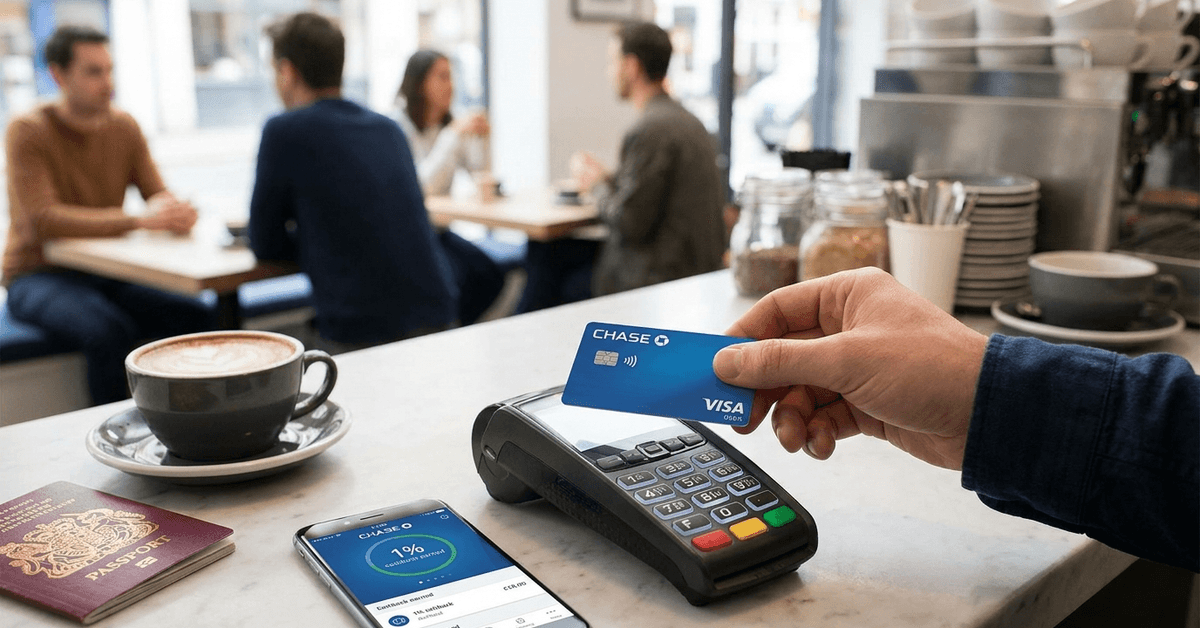
The 1% cashback applies to almost all card purchases for the first 12 months after activation. Supermarkets, coffee shops, online retailers, takeaways. The card does not restrict eligible spending to a list of approved merchants.
Cashback is calculated per eligible transaction and paid monthly as real money into your account. No points. No minimum redemption threshold. No waiting until December.
What Gets Excluded From the 1%?
Not every payment earns cashback. The card excludes:
- Cash withdrawals from ATMs
- Money transfers between accounts
- Gambling and betting transactions
- PayPal top-ups (most likely excluded)
- Certain utility and bill payments
The exclusion list is reasonable for a debit card. Most day-to-day card spending at physical and online retailers qualifies. But the terms can update, so checking the official Chase UK site before assuming a purchase qualifies is a good habit.
How the Cashback Math Actually Works
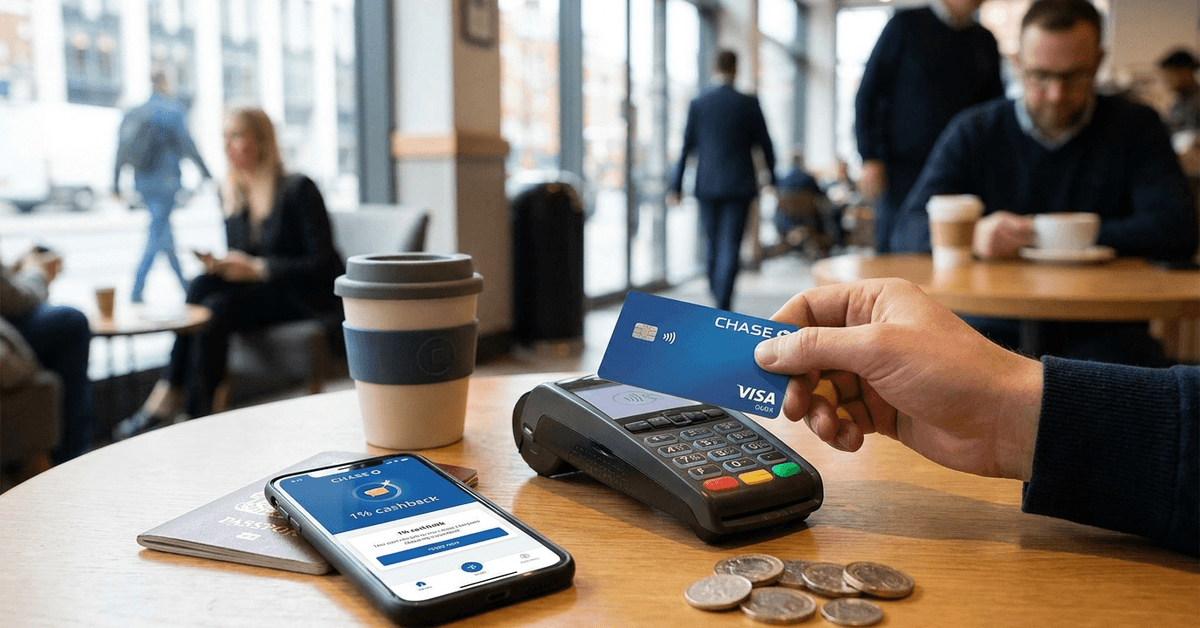
The calculation is genuinely simple. Spend £500 a month on eligible purchases, and you receive £5 back. Do that consistently for 12 months, and you end up with £60 in your account. Spend £1,000 a month and you receive £120 across the year.
I think £60 to £120 per year matters more for debit-card users than the headline rate suggests, because debit users are not earning anything at all on comparable spending with standard UK current accounts.
Moving spending to Chase from a non-reward account is a £60 to £120 gain for doing nothing differently.
The cashback appears in the Chase app as soon as a transaction settles, usually within a couple of days. Watching it accumulate is oddly satisfying, and a few people report that the visibility alone makes them more conscious of where they are spending.
What Happens After 12 Months?
This is the part reviews gloss over. The 1% flat rate is a first-year offer. After 12 months, the ongoing cashback terms change, and Chase has not historically offered the same flat rate indefinitely.
If maximising cashback long-term is the goal, treat this card as a 12-month earning window and reassess before the anniversary.
Features Worth Knowing Beyond the Cashback
The cashback is the headline, but two other features might be more useful depending on how you travel and spend.
Fee-free overseas spending is included as standard. The Visa exchange rate applies, and Chase adds nothing on top. No foreign transaction fees, no loading charges. For anyone who travels even once or twice a year, that alone saves money compared to most UK high-street bank accounts.
Free ATM withdrawals abroad are also included, though local machine operators can still charge their own fees. That caveat aside, Chase removes its own charges entirely.
The Round-Up Savings Feature
Every card payment rounds up to the nearest pound, and the difference moves into a savings pot. That pot earns bonus interest. The amounts per transaction are tiny. A £3.40 coffee adds 60p to the pot.
Over a full year of regular spending, the round-up pot adds up to something meaningful without requiring any deliberate saving behaviour.
The fact that it earns a small return on top of that is a useful detail that rarely gets enough attention in standard Chase card reviews.
Chase UK vs. Other Cashback Accounts in 2026
The comparison below focuses on accounts that reward general spending, not just specific merchants.
| Account | Cashback Rate | Annual Fee | Eligible Spend |
|---|---|---|---|
| Chase UK (Debit) | 1% (first 12 months) | £0 | Almost all card purchases |
| Barclays Blue Rewards | Up to 15% (select partners) | £5/month | Selected merchants only |
| NatWest Reward | £4/month back on bills | £2/month | Council tax, utilities, mobile |
| American Express Platinum Everyday | 0.5% to 0.75% | £0 | Card purchases (credit card) |
Chase wins on simplicity. Barclays Blue Rewards can outperform it if you spend heavily at their partner retailers, but outside those merchants the rate drops.
atWest Reward is built around bills, not general spending. Amex requires a credit check and a good credit history, which is a barrier for a portion of applicants.
The takeaway: if your spending is spread across general retailers and you want zero friction, the Chase 1% rate for 12 months is the cleanest deal on this list.
My Honest Take on Who Should Get This Card
I genuinely disagree with the advice to treat this card as a primary account replacement for people who already hold strong rewards credit cards. A good Amex cashback card at 0.5% to 0.75% ongoing beats Chase after month 12.
For existing credit card rewards earners, the first-year benefit is real, but the long-term calculus does not favour a full switch.
The Chase UK cashback card is strongest for two specific types of people. First, anyone who actively avoids credit cards and has been earning nothing on debit spending.
Second, anyone planning to travel in the next 12 months who wants to consolidate their spending into one fee-free account and earn 1% back while doing it.
The debit-first angle is genuinely underserved in cashback conversations. A Which? guide to cashback accounts lists very few debit options that reward general spending at this rate without restrictions. That gap is what makes Chase's offer stand out in 2026, not the percentage itself.
A quick summary of who this card suits:
- Debit-card-first spenders who earn nothing on current account spending
- Frequent travellers who want fee-free overseas card use and ATM access
- People new to cashback who want a simple, no-category system
- Anyone who wants a 12-month earning window while reviewing longer-term options
Questions People Ask About the Chase UK Cashback Card
Q: Do you have to activate the cashback, or does it start automatically? After opening a Chase current account, the 1% offer must be activated manually through the app. That activation starts the 12-month window, so do it as soon as the account is open to maximise the earning period.
Q: Can existing Chase customers access the cashback offer? Existing account holders may still be eligible if the cashback offer has not been previously activated. Once you start it, the 12-month timer begins from that date, not from when the account was opened.
Q: Does using this card affect your credit score? Spending on a Chase debit card is not reported to credit reference agencies. The card does not build credit history, and it does not hurt your credit score either. It is a completely separate product from a credit card.
Q: Is there a cap on how much cashback you can earn in 12 months? As of 2026, Chase does not publish an annual cashback cap for the first-year offer, though terms can change. Anyone making large purchases should verify current terms on the Chase UK website before assuming uncapped earning applies.
Q: What are the most comparable alternatives if Chase is not right for you? The Barclaycard Rewards Credit Card offers ongoing cashback at a lower rate without a time limit. NatWest Reward suits people whose main reward opportunity is through direct debits and bills. Both require a credit check, unlike Chase.
Conclusion
The Chase UK cashback card earns £60 to £120 in the first year for typical spenders doing nothing different with their everyday purchases. The overseas travel benefits make it worth keeping even after the cashback window closes.
For debit-first users, no equivalent offer on the UK market right now comes close to matching this combination of simplicity and return. The 12-month clock starts when you activate it, so do not let it sit unused.