
Securing a technical career at Saudi Aramco holds unique opportunities and challenges. Whether new to the field or advancing from another company, understanding the landscape is vital.
Technical roles at Aramco remain in high demand among both local and international talent. This guide outlines practical strategies and firsthand advice for those considering this ambitious path.
Professionals in engineering, IT, and scientific areas will gain the most from focused examples and stepwise recommendations.
Understanding Technical Roles at Saudi Aramco
Saudi Aramco is among the world’s largest integrated energy and chemicals companies. The company’s operations span various domains, including engineering, geosciences, information technology, and research & development.
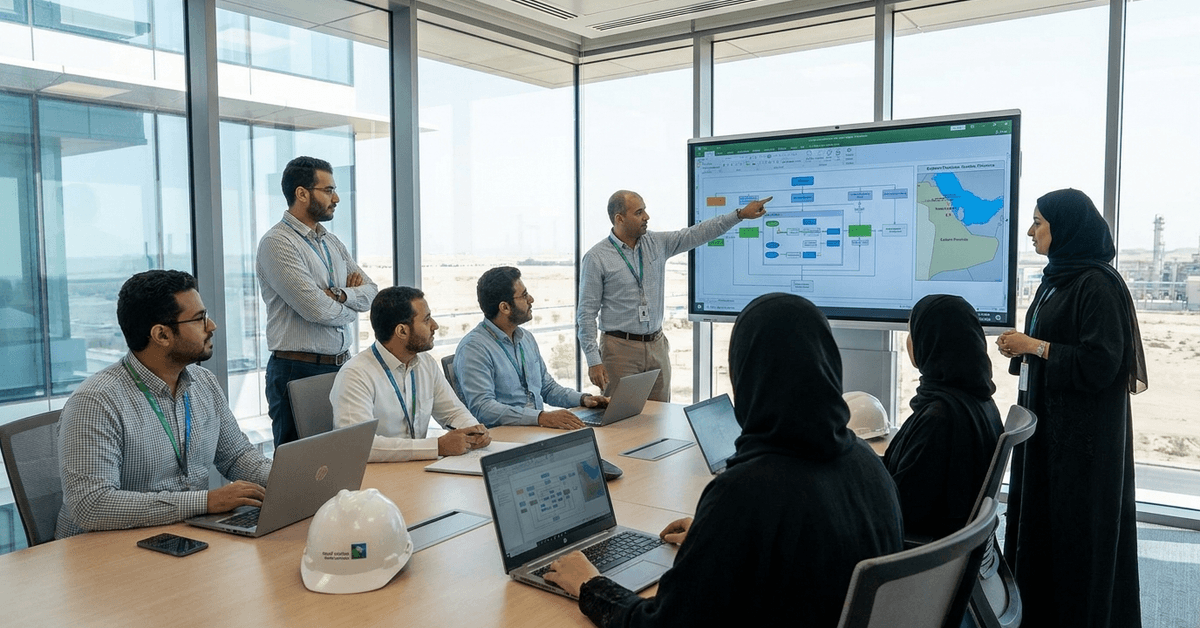
Key Disciplines and Job Titles
- Process Engineering: Involves refining processes, optimizing output, and ensuring safety.
- Petroleum Engineering: Focuses on reservoir management and field development.
- Geoscience: Covers geology, seismic interpretation, and exploration.
- IT Systems: Encompasses cybersecurity, infrastructure, and application development.
- Project Management: Includes project controls, scheduling, and interface management.
Typical Career Paths
Candidates often begin as junior engineers or analysts. Growth can lead to senior engineering teams, technical advisory roles, or project leadership over time. This progression usually follows a staged development plan monitored by HR and technical management.
Recruitment Process and How to Prepare
A well-prepared candidate is better positioned to navigate each stage of the SEC recruitment process.
Understanding what may be assessed—from technical knowledge to communication and problem-solving—can make preparation more focused.
1. Online Application
Start with a tailored CV that highlights relevant experience, measurable achievements, certifications, and technical skills. Ensure that your application information is accurate and closely aligned with the role requirements.
2. Online Assessments
Some positions may include aptitude, logical reasoning, personality, or technical assessments. These tests are designed to evaluate problem-solving ability, workplace behavior, and job-specific knowledge.
3. Technical Interview
Technical interviews usually focus on practical scenarios and concepts related to the position. Review core principles from your field and be prepared to explain how you would approach real workplace problems.
4. Panel or Behavioral Interview
Candidates may meet with HR representatives, managers, or technical specialists. Questions often explore teamwork, leadership, communication, conflict resolution, and decision-making.
5. Offer and Onboarding
Successful candidates may proceed to document verification, background checks, medical requirements, or other onboarding steps depending on the position.
Useful Preparation Tools
The right preparation tools can sharpen your technical knowledge, reasoning skills, interview confidence, and overall readiness before each stage of recruitment.
Practice Assessments
Platforms such as SHL and Talent Q-style practice resources can help candidates become familiar with common reasoning-test formats.
Refresh Technical Knowledge
Resources such as LinkedIn Learning and Khan Academy can support revision of technical, analytical, and professional concepts relevant to the role.
Prepare STAR Examples
Use the STAR method—Situation, Task, Action, and Result—to organize examples from previous work or study. Preparing several examples in advance can make behavioral interview answers clearer and more concise.
Skills and Certifications That Stand Out
Strong candidates often combine technical expertise, practical experience, and recognized certifications. The most valuable qualifications depend on the role, but a mix of specialized knowledge and leadership capability can strengthen a professional profile.
Technical Software Skills
Engineering and technical positions may require familiarity with specialized software used for modeling, simulation, design, or operational analysis.
Examples include:
- Petrel for geoscience and reservoir-related work
- Aspen HYSYS for process simulation and engineering
- MATLAB for numerical analysis and modeling
- Python or C++ for automation, analytics, and technical applications
Programming and Data Skills
Programming knowledge can be valuable for roles involving data analysis, automation, optimization, or digital systems.
Python is particularly useful across engineering, analytics, and technology functions, while MATLAB and C++ may be relevant for more specialized applications.
Safety and Compliance Knowledge
Understanding applicable safety procedures, technical standards, and regulatory requirements is important in infrastructure and engineering environments.
Candidates should highlight any experience with risk management, safety systems, or compliance frameworks relevant to the position.
Certifications That Can Strengthen a Profile
Professional credentials can demonstrate specialized knowledge and commitment to career development.
Engineering Credentials
Professional Engineer (PE) or Chartered Engineer (CEng) status can strengthen credibility for experienced engineering professionals, depending on the country and role requirements.
Project Management Certification
The Project Management Professional (PMP) credential can be valuable for candidates pursuing project leadership, coordination, or management responsibilities.
Cybersecurity Certification
For IT and cybersecurity positions, certifications such as CISSP can demonstrate knowledge of security management, risk, architecture, and related disciplines.
Match Qualifications to the Role
Not every certification is necessary for every position. Candidates should prioritize skills and credentials directly connected to the job description rather than collecting qualifications that offer little relevance to their intended career path.
Working Environment and Locations
Saudi Aramco’s technical operations are headquartered in Dhahran, with satellite offices around the Eastern Province. Many sites are located in Ras Tanura, Abqaiq, and Jubail. Daily work often involves field visits and multidisciplinary teamwork.
Office Culture and Facilities
The workplace experience goes beyond the job itself. Office culture, team dynamics, facilities, and everyday support can shape comfort, productivity, and long-term satisfaction.
- Shared open-plan offices as well as private workspaces for sensitive projects.
- Employee housing, recreation centers, and support services available in company compounds.
- Formal dress code and a respectful, multicultural workplace environment are standard.
Work-Life Balance Considerations
The technical workload can be intense, especially during commissioning or shutdown projects. However, structured time-off policies and periodic rotations help mitigate fatigue, especially in field-intensive roles.
Professional Growth and Career Development
Saudi Aramco supports continuous learning, technical development, and leadership growth through structured career opportunities. Progression can depend on performance, project contributions, experience, and role-specific development.
Training and Development
Employees may access technical workshops, internal seminars, knowledge-sharing sessions, and selected external learning opportunities.
Professional certifications and advanced education can also support specialized or leadership career paths.
Mentorship and Networking
Mentorship can help employees strengthen technical and organizational skills while learning from experienced colleagues. Participation in professional organizations such as SPE or IEEE may expand industry connections.
Long-Term Progression
Internal collaboration, training, and project experience can help employees prepare for specialist, supervisory, or leadership roles over time.
Essential Apps and Tools for Success
Digital tools can improve collaboration, planning, analysis, and technical efficiency across many Saudi Aramco roles. The exact software used depends on the department, project, and job responsibilities.
Communication and Collaboration Tools
Platforms such as Microsoft Teams can support meetings, messaging, and file sharing across distributed teams. SharePoint may also be used for document management, internal collaboration, and workflow organization.
Project Management Software
Technical and project teams may use tools such as Microsoft Project or Primavera P6 to track schedules, milestones, resources, and project dependencies. These platforms can help coordinate complex engineering and operational work.
Technical and Engineering Platforms
Specialized roles may rely on software such as Aspen HYSYS for process simulation or ArcGIS for mapping and spatial analysis.
Data and Analytics Tools
Power BI, Python, pandas, and NumPy can support data visualization, reporting, automation, and technical analysis. Developing proficiency with these tools can strengthen productivity and support more data-driven decision-making.
Tips to Succeed in the Aramco Technical Environment
Success in Aramco’s technical environment depends on more than expertise alone. Combining strong technical skills, adaptability, safety awareness, teamwork, and continuous learning can help professionals perform effectively and grow over time.
- Active participation in technical meetings can raise your visibility among key stakeholders.
- Consistent upskilling helps keep you ahead as technology in the industry evolves.
- Adapting to diverse, cross-cultural teams is necessary given the international workforce.
- Continuous feedback from supervisors (and even informal advice from peers) can reveal useful improvement areas.
Conclusion: Building a Rewarding Technical Career at Saudi Aramco
Building a technical career at Saudi Aramco requires technical expertise, adaptability, continuous learning, and strong collaboration.
Staying current with industry tools, pursuing relevant certifications, and seeking feedback can support long-term professional growth.