
Digital payments can make everyday money management clearer. SAIB Point of Sale serves merchants accepting cards.
This guide explains PoS features, security, records, limitations, and uses for routine purchases. It also clarifies how the service differs from personal borrowing products.
What Is SAIB Point of Sale?
SAIB Point of Sale is a merchant payment service from The Saudi Investment Bank. It connects approved terminals to merchant accounts for efficient card acceptance and settlement.
How the Service Works?
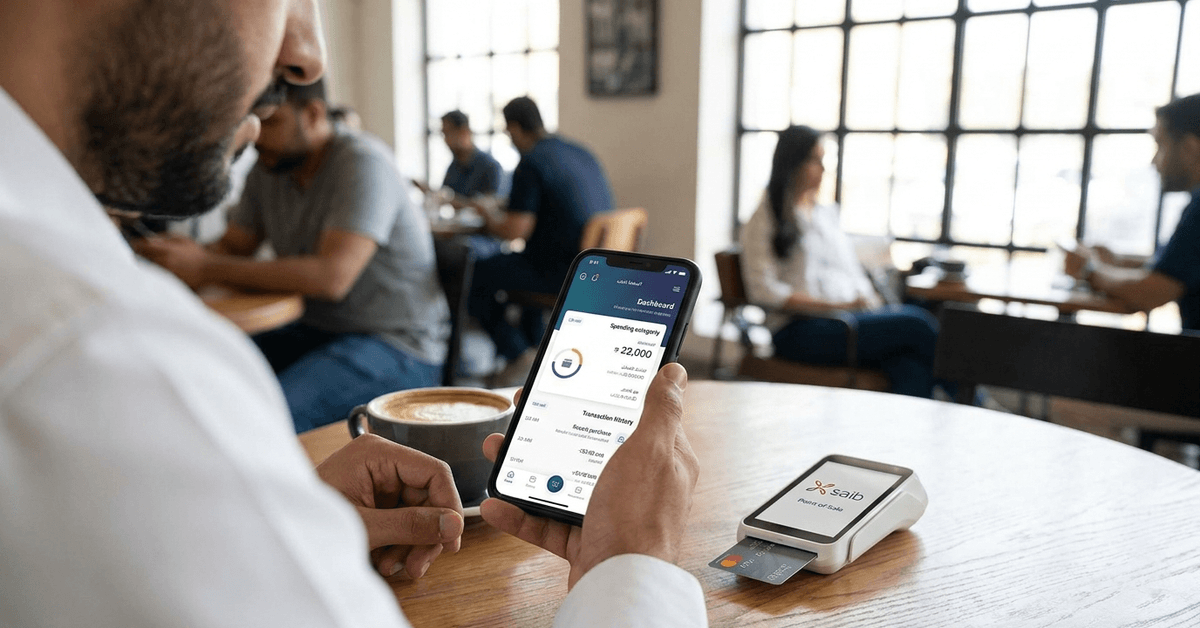
The service allows merchants to accept mada, Visa, Mastercard, American Express, and approved international cards through supported terminals.
Processed amounts can reach the merchant’s SAIB account, while statements remain available through corporate online banking. This setup focuses on payment acceptance and settlement, rather than acting as a personal budgeting application.
Merchant-Focused Design
SAIB’s current PoS service is intended for businesses that sell goods or provide services. Merchants must link the terminal to a bank account and complete the service agreement.
Individuals comparing SAIB loans, personal finance KSA, or a low salary requirement should therefore review the bank’s separate financing products instead of treating PoS as consumer credit.
How SAIB PoS Supports Accessible Personal Finance?
PoS technology can still support day-to-day financial awareness because electronic payments create clearer records. For consumers, the benefits come mainly through card acceptance, receipts, and easier electronic purchasing.
Lowering Barriers to Entry
Electronic card acceptance can reduce dependence on cash-only transactions at participating merchants.
Customers can pay with familiar cards without arranging cash beforehand. Merchants also gain a structured way to accept payments without handling every transaction manually.
Simplified Budgeting and Expense Tracking
Consumers can use their own banking transaction records to review purchases made through PoS terminals. The merchant terminal itself does not provide customers with a personal budgeting dashboard.

Electronic payments can make expense review easier because transactions appear in the customer’s account history.
Inclusive Payment Methods
SAIB PoS terminals support multiple approved card networks, giving merchants flexibility in how they accept payment.
This includes mada and major international cards supported by the bank. Broader acceptance can make routine purchases more convenient for customers using different cards.
Key Features for Everyday Users
Although the service is designed for merchants, several customer-facing benefits appear during ordinary purchases. These features center on convenient acceptance, payment processing, and electronic records.
Instant Transaction Notifications
Transaction alerts generally come from the customer’s card issuer or banking app, not directly from the merchant’s SAIB terminal.
Such alerts can help cardholders notice unfamiliar purchases quickly. Customers should contact their issuing bank if a transaction appears incorrect or unauthorized.
Integrated Account Overview
The SAIB PoS service gives merchants access to transaction statements and settlement information through corporate internet banking.
Customers instead review balances and card activity through their own banking channels. Keeping these roles separate helps avoid confusing merchant tools with individual account-management services.
Easy-to-Use Mobile Access
SAIB also offers Soft PoS, which lets eligible merchants accept payments using a compatible Android smart device.
This can reduce the need for a traditional terminal in businesses such as taxis, delivery services, seasonal exhibitions, field sales, and food trucks. For customers, the experience remains a standard card payment rather than direct access to the merchant application.
Local Language Support
Clear language remains important when people handle payments and financial information. SAIB provides banking information and service materials through its official channels in Arabic and English.
Users should rely on the language version they understand best when reviewing terms or resolving payment issues.
Security and Privacy Considerations
Electronic payments involve sensitive card and transaction data, making security important for merchants and customers. SAIB’s PoS environment operates within established payment-network and Saudi banking requirements.
Fraud Detection Features
Customers should monitor card activity and alerts through the bank that issued their card. If an unfamiliar transaction appears, quickly blocking the card or reporting the transaction can reduce further risk.
Merchants should also follow SAIB training and card-acceptance procedures to help identify suspicious activity.
Data Privacy and Control
SAIB publishes a privacy notice describing how personal data is collected, used, and protected under Saudi data-protection requirements. The notice covers banking and payment services, including PoS and merchant-acquiring activities.
Customers and merchants should review relevant privacy terms before providing personal or business information.
Potential Drawbacks or Things to Consider
PoS systems provide convenience, but technical and operational limits still matter. Users should understand connectivity requirements and the service’s merchant-oriented scope.
Dependence on Stable Internet Access
Certain PoS types rely on mobile or internet connectivity for transaction processing and reconciliation. Temporary network problems can interfere with payment speed or terminal communication. Merchants should follow official support procedures when a device or connection stops working.
Scope of Features
SAIB PoS is designed mainly for merchant payment acceptance, settlement, support, and transaction reporting.
It does not replace a consumer budgeting app, personal transfer service, or personal finance account dashboard. People seeking those functions should use appropriate individual banking products and channels instead.
How Everyday Scenarios Are Changing
Digital card acceptance can simplify ordinary payment situations for both merchants and customers. The clearest benefits appear when purchases are processed electronically and recorded automatically.
Tracking Small Expenses
Small purchases can accumulate quickly across a month. Paying electronically creates searchable transaction records through the customer’s own bank or card account.
Reviewing those records regularly can reveal recurring spending patterns that might otherwise be overlooked.
Splitting Costs with Friends
A merchant PoS terminal does not normally provide person-to-person bill splitting between friends. Customers can still pay their share separately when a merchant permits multiple card transactions.
Direct transfers between individuals should use suitable banking or payment-transfer tools instead.
Tips for Using SAIB PoS for Personal Finance
Consumers can treat electronic purchase records as one budgeting input, while merchants should use PoS according to business requirements. A few practical habits can make digital payments easier to monitor.
- Enable transaction alerts through your own bank or card issuer.
- Review card statements regularly for unfamiliar activity.
- Keep digital or printed receipts for important purchases.
- Use secure cards and devices when making payments.
- Contact the card issuer promptly about unauthorized charges.
- Merchants should reconcile PoS transactions regularly.
- Follow official SAIB guidance for terminal support and maintenance.
- Avoid sharing PINs, verification codes, or banking credentials.
Conclusion
SAIB Point of Sale is primarily a merchant payment solution, not a personal budgeting platform. Its value to consumers comes through convenient card acceptance, electronic records, and easier payment tracking.
Merchants gain settlement, reporting, terminal support, and broad card-network acceptance through the service. Understanding the correct role of PoS helps users choose suitable tools for payments, budgeting, or financing.