
Working at McDonald's is a realistic starting point for many looking for experience, a paycheck, or even just a structured first job. Many people, whether teenagers or adults, find themselves considering fast food roles.
The fast-paced, customer-focused environment can teach useful skills, and getting a position isn’t as complicated as it may appear.
Why a McDonald's Job Can Be a Strategic Career Move?
There are some misconceptions about jobs at McDonald's. Some see them as just entry-level roles, but perhaps there’s more to it.
With flexible scheduling, team-based learning, and clear career ladders, this job can offer more opportunities than expected.
Valuable Skills for Future Roles
It isn’t only about flipping burgers. Team members build customer service, time management, and multitasking skills—abilities that translate to almost any career path later. Not everyone thinks about that at first.
Reliable Pay and Benefits
A fast food job usually offers regular pay, and sometimes there are extra benefits. Some locations provide meal discounts, health insurance, or tuition assistance. This varies by location, so checking details directly is a good idea.
Opportunities for Promotion
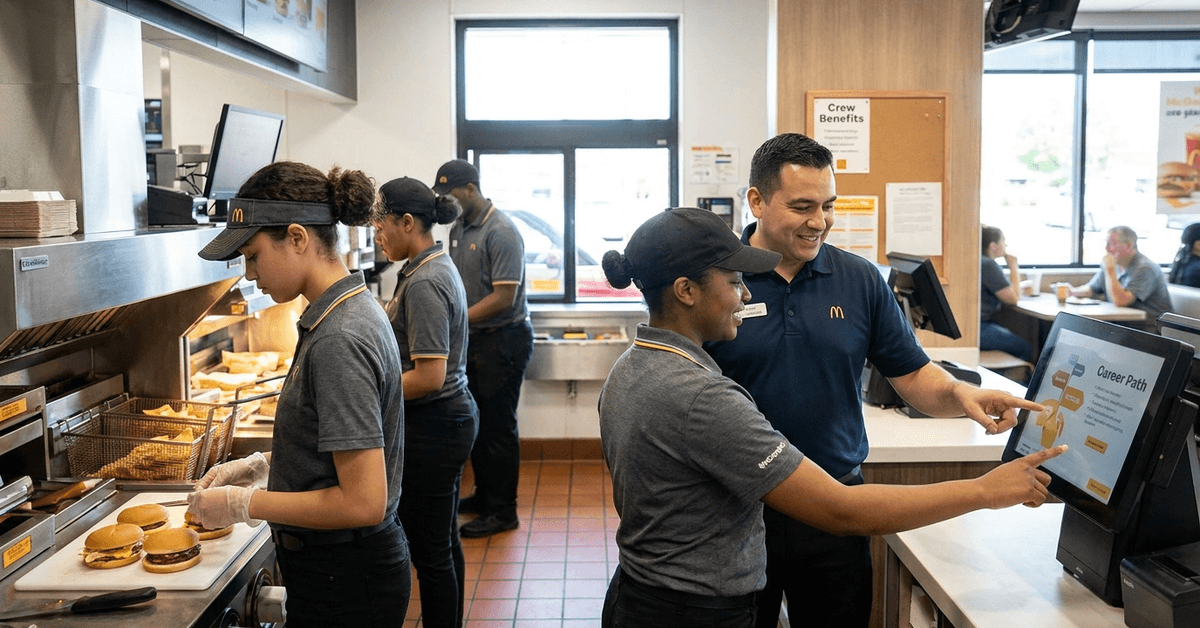
Many managers and higher-ups started at the counter. The chain prefers to promote internally when possible, so there’s real, if gradual, career growth to be found.
Understanding McDonald's Recruitment Process
The hiring steps at McDonald's are generally straightforward, but might have subtle variations by location or country. Usually, there’s an application, interview, and sometimes a short assessment.

What Roles Are Common?
- Crew Member
- Cashier or Counter Staff
- Cook or Kitchen Team
- Shift Leader
- Maintenance or Cleaner
Some of these might overlap or require extra training, but most start as crew members.
Minimum Hiring Age and Requirements
The minimum hiring age for McDonald's is often 16, but it can be lower or higher depending on local laws. No formal degree is usually required, but basic communication and reliability matter.
Steps to Apply for a Job at McDonald's
Applying has moved online for most locations, though some stores also accept walk-in applications. The online process tends to be efficient and reduces manual paperwork.
1. Gathering the Right Information
- Personal contact details
- Basic education history
- Previous job experience (if any)
- Availability (days, shifts)
- References (sometimes optional)
Bringing this information together before starting can make things smoother.
2. Finding Local Store Openings
Most positions are listed on the official McDonald's Careers website. Users can search by city, ZIP code, or keyword. Offline, some locations display job ads on store windows.
3. Completing the Application Form
The online form can usually be finished in less than 20 minutes. Important: honesty matters, especially around availability and prior experience. If there’s uncertainty about schedule, leaving room for flexibility can help later.
4. Assessment or Questionnaire
Some stores ask for a short online test covering basic customer service or workplace scenarios. It’s often not too challenging. Some applicants describe it as more common than expected.
5. Waiting Period
Application response times vary. Some get a callback within days, others wait weeks. If there’s no news after 7–10 days, visiting the store to gently ask about the application may show motivation.
What to Expect During the Interview
Interviews at McDonald's are typically straightforward. These can be held one-on-one or as group sessions, depending on local hiring needs.
Typical Interview Questions
- "Why do you want to work at McDonald's?"
- "Describe a time you handled a difficult customer."
- "What would you do if a coworker was late?"
Honesty and showing a willingness to learn seem more important than perfect answers. Not everyone feels confident right away, but that’s normal.
Dress Code for Interviews
Simple, neat clothing works best. Some opt for business-casual, but even a clean T-shirt and jeans are usually fine—overdressing isn’t expected.
Possible On-the-Spot Offers
Sometimes, managers make hiring decisions almost immediately, especially if staff are needed urgently. If not, they typically give a timeline for a decision.
Onboarding and First Days on the Job
If offered the role, newly hired employees might need to fill out HR forms, provide IDs, and possibly complete short online training. Some locations require background checks, but not all.
Required New Hire Documents
Preparing your documents before the first day can make onboarding faster and less stressful. Most employers will ask for proof of identity, work eligibility, and any required local permits.
- Government-issued photo ID
- Social Security Number or local equivalent
- Work permit (if under 18, in some areas)
Training and Orientation
The first few shifts are mostly about shadowing others, learning kitchen safety, and understanding how to interact politely with customers. Feedback comes continuously, not only after orientation.
Tips for Standing Out as a McDonald's Job Candidate
Some applicants may worry about competition. To improve chances, focusing on strong work ethic and flexible availability can help.
Emphasizing Reliability and Teamwork
Managers value crew who arrive on time, communicate well, and help colleagues. Sharing small stories of overcoming obstacles—true or hypothetical—makes an impression.
Willingness to Learn New Tasks
It’s common for team members to work different stations. Mentioning flexibility or readiness to adapt may work in the candidate’s favor.
Staying Up-to-Date on Openings
Checking local store boards regularly can be helpful. Sometimes, opening hours or hiring needs can shift from week to week.
Legal, Tax, and Age Considerations for Fast Food Work
Before starting, it’s a good idea to double-check any required permits for minors or non-citizens. Taxes and paycheck deductions are also worth understanding ahead of time.
Legal Work Age and Permits
If under 18, a work permit may be necessary, laws differ widely. Most managers are aware of these rules and can help clarify if asked.
Getting Paid and Tax Obligations
Employees usually receive payment via direct deposit or paper check. Taxes, social deductions, and sometimes uniforms or union fees may be taken out automatically.
Exploring Pathways Beyond Entry-Level Jobs
Sometimes it’s just a summer job. Sometimes it leads to more. McDonald's offers step-up roles such as crew lead or shift manager. From there, training or tuition programs can open the door to other careers inside or—even surprisingly—outside food service.
Stories of Career Progression
It’s not unheard of for past McDonald's crew to move into management, corporate, or even entrepreneurial paths. Some say the day-to-day intensity prepares you for future jobs, sometimes in unexpected ways.
Conclusion
A McDonald’s job can be a practical starting point for people seeking work experience, steady pay, and flexible scheduling. The application process is usually simple, but reliability, teamwork, and a willingness to learn can help applicants stand out.
Benefits, pay, and promotion opportunities may vary by location, so asking questions before accepting a role is important. With the right attitude, working at McDonald’s can build skills that support future career growth.