
Amazon Flex offers a flexible way to earn money by delivering Amazon packages using your own vehicle. The program operates in many US cities, including Los Angeles, Houston, and Atlanta.
For those interested in independent gig work, it's become a popular side income option. Anyone looking for flexible hours and direct earning potential will find value in Amazon Flex.
The main benefit lies in the freedom to choose your schedule while receiving reliable payment for each completed delivery block.
What Is Amazon Flex?
Amazon Flex allows drivers to deliver packages for Amazon using their personal cars. Drivers, called delivery partners, pick up packages from Amazon delivery stations or Prime Now hubs and bring them to customers' doors.
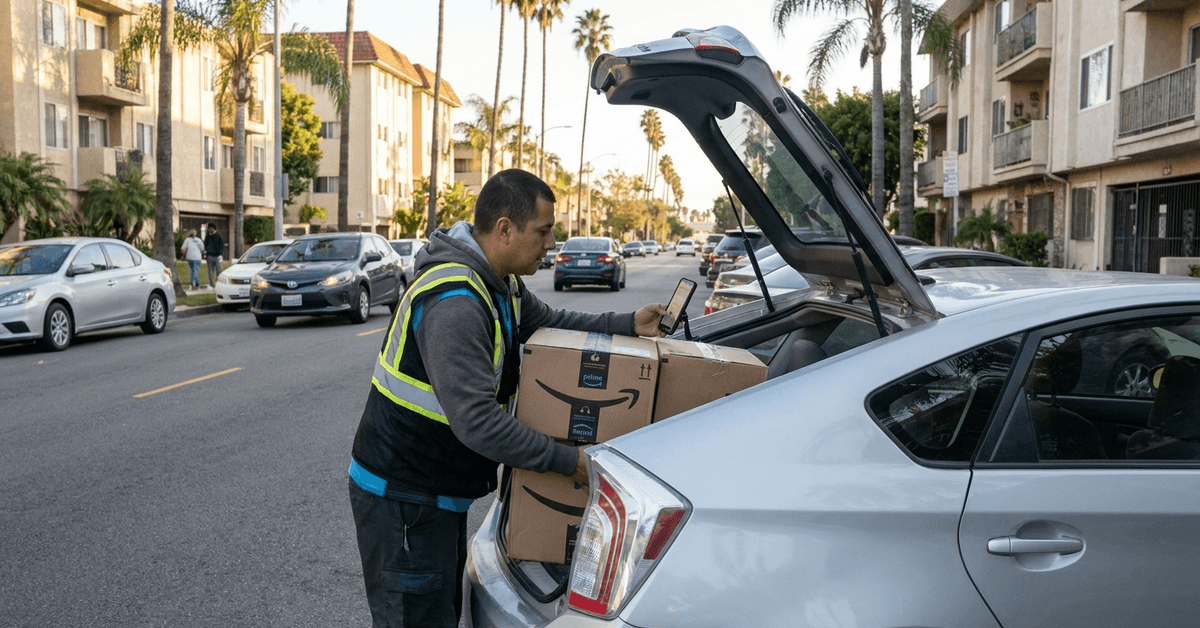
Most blocks are scheduled in advance through the official app. Typically, delivery blocks last 3 to 4 hours and show a guaranteed payout before accepting the job.
How Amazon Flex Works: The Process Step-by-Step
Amazon Flex lets drivers choose delivery blocks, collect assigned packages, follow app-guided routes, complete deliveries, and receive payment for finished work.
Signing Up for Amazon Flex
Signing up for Amazon Flex involves creating a driver account, submitting required documents, completing verification, and waiting for approval to begin delivering.
- Download the Amazon Flex app from the App Store or Google Play.
- Sign in with your Amazon account or create a new one.
- Complete the background check and verification process, which usually takes a few days.
- Select your preferred delivery area from existing cities with open availability, such as Dallas or Chicago.
Requirements for Drivers
Amazon Flex drivers must meet specific age, licence, vehicle, insurance, smartphone, and background-check requirements before they can begin accepting delivery blocks.
- You must be 21 years or older.
- Hold a valid US driver's license.
- Own a vehicle that meets Amazon's requirements. Compact cars are sometimes sufficient, but larger vehicles like SUVs are often preferred for higher package capacity.
- Carry valid auto insurance with liability coverage.
How Delivery Blocks Work
Delivery blocks are scheduled work periods that drivers reserve in advance, allowing them to complete assigned deliveries within a specified time frame.
- Delivery blocks (shifts) are released daily. Drivers can reserve available blocks in the app, with most cities seeing new releases early morning or at midnight.
- Each block specifies a start time, pickup location, estimated number of packages, and the preset payout. For example, a three-hour block in Miami might offer $60 to $90.
- Arrive at your assigned Amazon location on time, check in via the app, and load your vehicle following the provided instructions.
Earnings and Payment Structure
Amazon Flex earnings depend on the block length, delivery type, location, demand, and any available incentives, with payment issued according to the platform’s schedule.
How Payments Are Calculated
Amazon guarantees payment per block, which varies with location, time, and package count. Earnings typically average between $18 and $25 per hour in most cities, though peak times sometimes offer higher rates.
When and How You Get Paid
Amazon Flex payments are deposited electronically according to the selected payout schedule, allowing drivers to track earnings and manage transfers through the app.
- The direct deposit system pays drivers twice weekly (usually on Tuesday and Friday). Payments are automatically deposited into your registered bank account within days of block completion.
- Some regions offer instant cash-out for eligible drivers, visible in the app if available.
Cities and Regions Where Amazon Flex Is Available
Amazon Flex operates in major urban centers and select suburbs. Cities with consistent demand include:
- Los Angeles
- New York City
- Houston
- Phoenix
- Seattle
- Atlanta
- Miami
Availability can change, so the app provides up-to-date lists of open delivery areas. New markets open periodically to meet rising demand.
Tools and Apps Every Flex Driver Should Know
Using the right digital tools can help Amazon Flex drivers navigate efficiently, organize deliveries, monitor expenses, and understand their actual earnings.
Essential Navigation Apps
The Amazon Flex app provides delivery instructions, package scanning, route guidance, and customer details. Google Maps offers real-time traffic information and alternative routes, while Waze can help drivers identify accidents, road closures, and other crowd-sourced traffic updates.
Productivity and Organization Apps
Evernote can store route notes, delivery reminders, parking information, and useful observations for frequently visited areas. Gridwise helps drivers track mileage, completed shifts, earnings, and work-related expenses.
Combining these apps can improve daily organization, reduce unnecessary driving, and provide clearer records for budgeting and tax preparation. Drivers should use a secure phone mount and avoid operating apps while the vehicle is moving.
Key Tips for Maximizing Efficiency and Earnings
Amazon Flex drivers can improve their results by planning schedules carefully, organizing packages efficiently, and monitoring operating costs. Small adjustments may reduce delays and protect the real profit earned from each block.
Optimize Your Schedule
Look for blocks during high-demand periods, such as weekday evenings, weekends, and holidays.
Some locations may offer higher rates when demand increases. Avoid unnecessary cancellations, as repeated changes may affect account standing or access to future opportunities.
Load and Deliver Efficiently
Arrange packages according to the delivery sequence shown in the app. Grouping parcels by stop, neighborhood, or postal code can make them easier to find. A folding dolly may also help with large packages or apartment deliveries.
Scan and confirm every package as required to maintain accurate delivery records.
Monitor Your Expenses
Track fuel, maintenance, tolls, parking, and other work-related costs. Compare these expenses with total block earnings to understand your actual profit.
Choose fuel-efficient routes, review traffic before departing, and avoid congested roads whenever practical.
Common Challenges and How to Overcome Them
Amazon Flex drivers may face heavy package volumes, technical problems, limited parking, and difficult delivery locations. Preparing practical alternatives can reduce stress and help keep each block on schedule.
Package Volume and Delivery Windows
Large package counts can create pressure, especially in dense urban areas. Organize parcels by delivery order or neighborhood before leaving the station.
Apartment complexes may require extra time, so review access instructions and plan nearby stops together. Store entry details only when permitted and protect customer information.
App Glitches and Scheduling Issues
Slow loading, weak signals, or GPS errors can interrupt a route. Keep Google Maps or another trusted navigation app available as a backup.
Because blocks may appear unpredictably, enable official notifications and check the Flex app regularly. Avoid unauthorized automation tools that could violate platform rules.
Parking and Customer Interactions
Allow extra time for legal parking in downtown areas, campuses, and apartment zones. Never risk fines or unsafe stops to save a few minutes.
When access instructions are unclear, send a brief, polite message through the app or contact support for guidance.
Extra Ways to Succeed as an Amazon Flex Driver
Long-term success with Amazon Flex often depends on consistent planning, realistic expectations, and a willingness to learn from each delivery block.
Track Earnings and Set Weekly Goals
Record block payments, tips, mileage, fuel, parking, and maintenance costs. Use this information to set realistic weekly income targets based on your actual profit rather than total payouts.
Learn From Other Drivers
Driver forums and local social media groups can provide useful information about delivery stations, traffic patterns, parking, and difficult neighborhoods. Protect customer privacy and confirm advice against official Amazon Flex policies before following it.
Prepare for Seasonal Demand
Holidays, major sales events, and busy shopping periods may create more delivery opportunities or higher-paying blocks. Monitor the app regularly and plan your availability in advance.
Avoid accepting more work than you can complete safely. Maintaining reliable attendance, accurate deliveries, and responsible driving is more valuable than pursuing every available block.
Conclusion: Making Amazon Flex Work for You
Driving for Amazon Flex presents a flexible route to supplemental income that fits diverse lifestyles. As with most gig jobs, the real rewards come from organization and attention to detail.
Careful block selection, consistent tracking of expenses, and routine safety practices help maximize both income and job satisfaction.
Although no single strategy fits every city or situation, exploring neighborhood routes and learning from other drivers help create better outcomes.